.png)
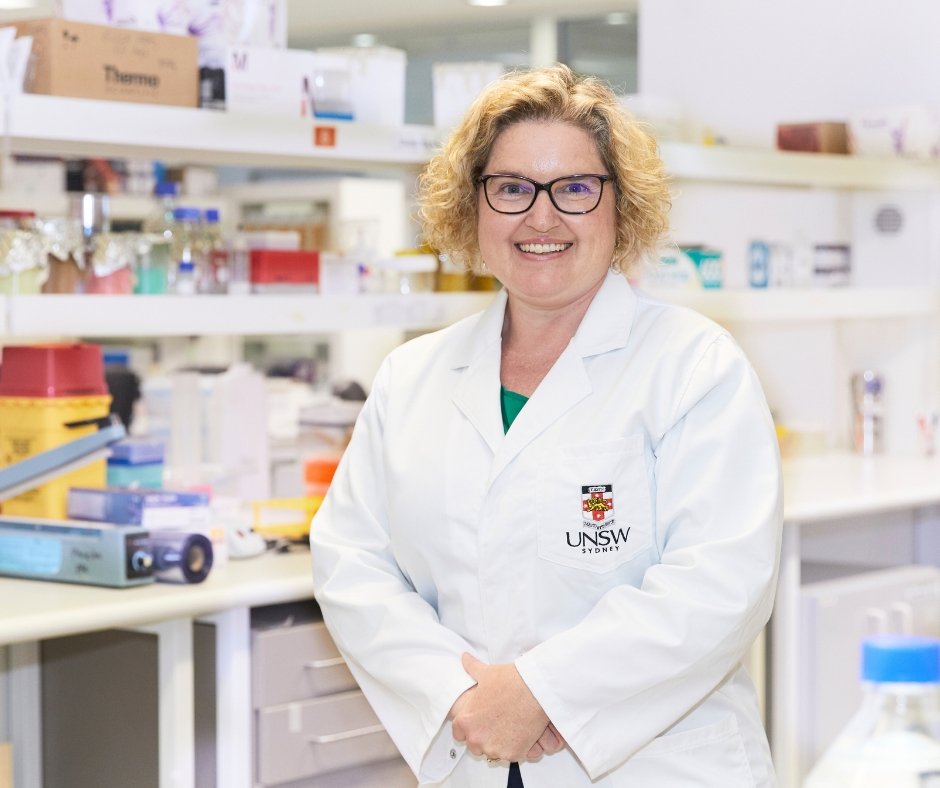
Professor Phoebe Phillips
UNSW Sydney (NSW)
$599,441.05
2026-2029
Background:
About 20,000 Australians are diagnosed with lung or pancreatic cancer each year.
Pancreatic and lung cancers are very hard to treat, with low survival rates and limited treatment options. One major reason is that cancer cells can become resistant to chemotherapy and other therapies. Prof Phoebe Phillips and the team have identified a protein called βIII-tubulin that helps these cancers survive and resist treatment, making it an important target for new therapies.
Another promising treatment approach is TRAIL, which can trigger cancer cells to self-destruct, but it has had limited success so far because cancers can resist it and because it is difficult to deliver effectively in the body.
About the Project:
Prof Phillips and team are developing a new “two-in-one” RNA nanomedicine designed to tackle treatment resistance from two angles at the same time. The therapy will be packaged inside lipid nanoparticles (tiny fat-based particles like those used in COVID vaccines) to improve delivery to tumours. Inside each nanoparticle, TRAIL mRNA (to help tumour cells produce TRAIL and trigger self-destruction) will be co-delivered with βIII-tubulin siRNA (to switch off βIII-tubulin and reduce resistance). By combining these into a single treatment, the challenge of poor bioavailability and the difficulty of targeting βIII-tubulin will be overcome. The nanomedicine will be tested thoroughly for how well it reaches tumours, how strongly it slows tumour growth, and how safe it is.
Impact:
This research helps existing treatments work better for people with pancreatic and lung cancer by overcoming treatment resistance. By helping cancer cells respond to therapy again, this approach could slow tumour growth and improve survival for patients with few current options.
Because this treatment uses a delivery method like COVID-19 vaccines, it also opens the door to faster development of new RNA-based cancer treatments. In the longer term, this research could support new clinical trials and lead to more effective, targeted treatments for people affected by these hard-to-treat cancers.


.svg)